
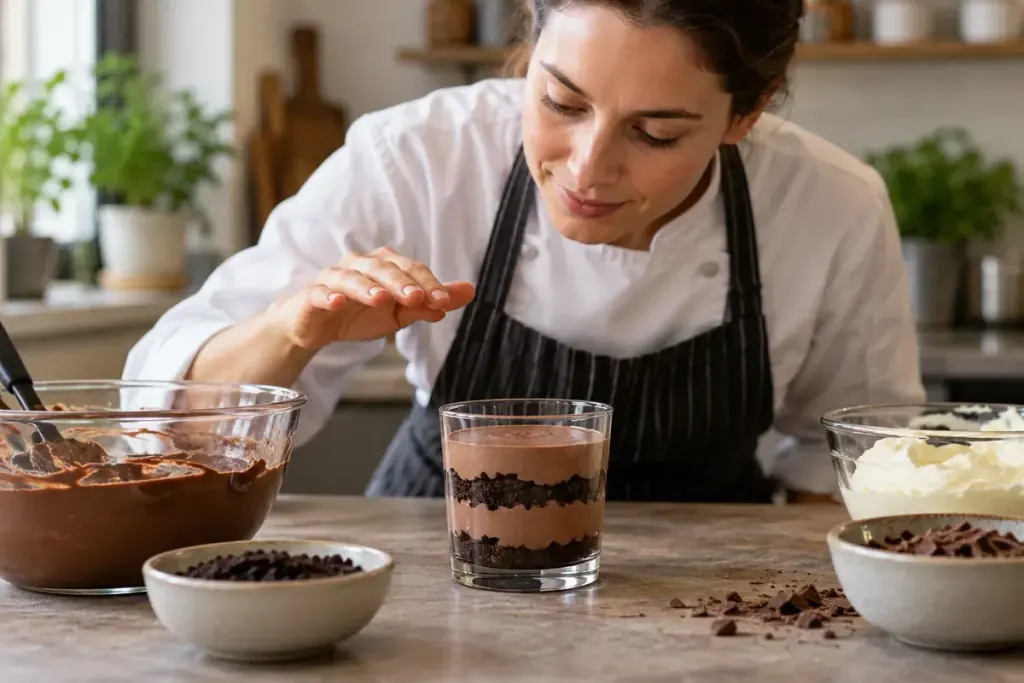
The chocolate layer looked smooth until it met the cream beneath it. A few seconds later, the neat boundary became a swirl. The flavour may still be pleasant, but the dessert did not have the structure you planned.
Read the recipe as a sequence of conditions
Look for descriptions such as cooled, set, softly whipped or warm enough to pour. These describe different states, not interchangeable waiting periods. A component can feel cool at the surface while remaining warmer underneath, especially in a deep bowl.
Use a tested recipe for the combination you want. Chocolate mixtures, custards, gels and whipped components respond differently; one universal cooling time cannot cover all of them.
Try a spoonful in a spare glass
Where the recipe allows, assemble a small sample using the same components and intended temperatures. Watch whether the lower layer supports the new one and whether the boundary remains clear. This can reveal a problem before you commit the whole batch.
Do not change several variables at once. If the mixture is too warm, address that using the recipe’s method before also changing its thickness, quantity and ingredient ratio. Record the condition that produced a workable sample.
Plan the holding space
Make sure the refrigerator has suitable space for the containers to remain level and protected. Follow safe storage guidance for perishable ingredients and the recipe’s cooling method; leaving a dairy or egg mixture out indefinitely to obtain a convenient texture is not an appropriate workaround.
Consider how the dessert will be served. A soft layer may work in a glass but not as a freestanding slice. The container is part of the design, not merely decoration added at the end.
If a layer has already mixed into the one below, decide whether the dessert can be presented honestly in another form while remaining safe to eat. Do not keep adding ingredients merely to hide the mistake.
For the next batch, keep notes on component condition and assembly order. The most helpful lesson may be “wait until this layer supports the sample,” not “add another ten minutes to every recipe.”