
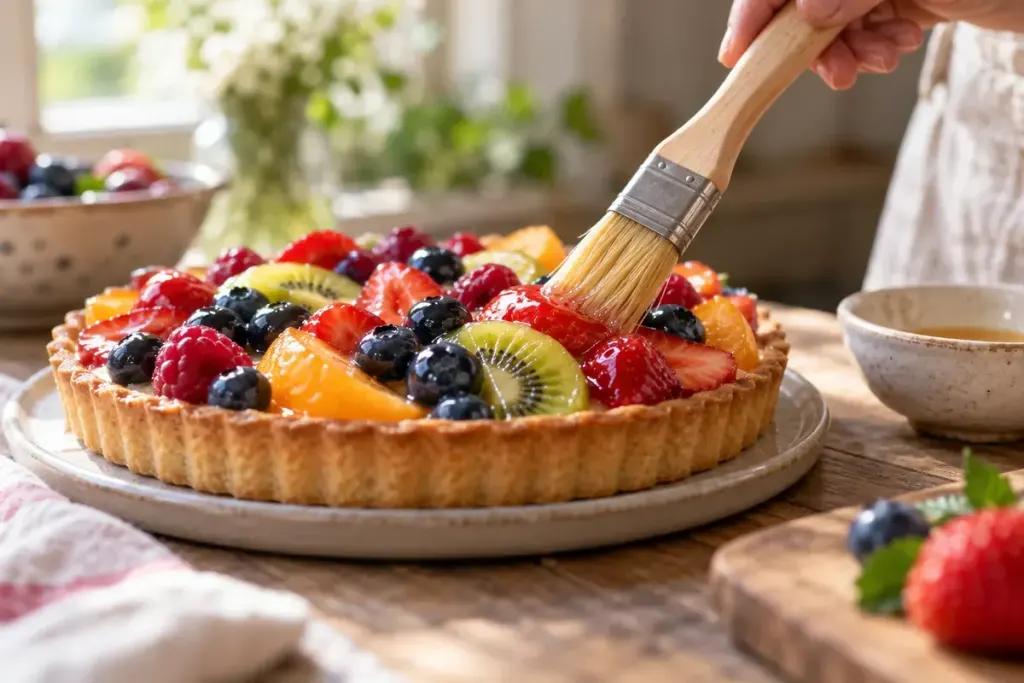
A light glaze can make the fruit on a tart look freshly arranged. Too much can gather between the pieces and turn a delicate finish into a sticky layer. Begin with a small amount and a brush you can control.
King Arthur Baking’s cream cheese tart recipe describes gently warming and straining thinned jam or preserves for a finishing glaze, or using warmed jelly. Follow the method appropriate to your glaze; a commercial neutral glaze may have different preparation instructions.
Prepare the fruit before the brush
Arrange the fruit on the prepared tart as the recipe directs. Check that pieces are stable enough to stay in place when touched lightly. If they slide at the first brushstroke, more glaze will not solve the underlying arrangement.
Use a suitable clean pastry brush. Load it lightly and test the movement on a spare piece of fruit. You are looking for a thin film, not a stream running off the brush into the filling.
Keep the glaze at the recipe’s usable temperature and consistency. Boiling-hot glaze is not a shortcut for spreading a thick mixture over delicate fruit. If it begins to set before you finish, follow the recipe or product instructions for returning it to a workable state.
Work from a small area outward
Brush gently over the exposed surfaces without repeatedly dragging the fruit around. Rotate the tart if that makes the angle easier. Stop and look from normal serving distance before deciding that every piece needs another coat.
For a first attempt, keep a note of the glaze used and whether it remained clear and spreadable. Changing the fruit, glaze and filling together makes it harder to understand why the finish behaved differently.
- Strain a glaze when the recipe calls for a smooth finish.
- Use only as much as the surface needs.
- Keep crumbs out of the glaze container.
- Follow the dessert’s storage instructions after finishing.
A glossy surface does not make a cream-filled tart shelf-stable. The filling and fruit still determine how the dessert should be stored and served. Plan the finishing stage around those requirements, so the tart looks attractive when it reaches the table rather than spending unnecessary time waiting there.