
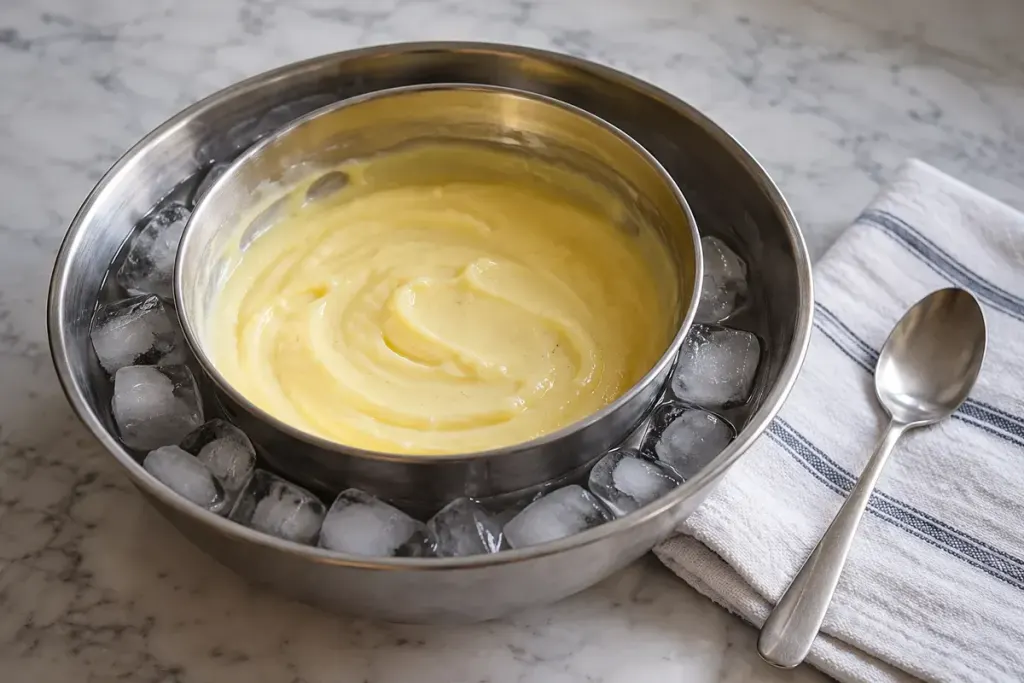
The custard is cooked, but the kitchen is warm and the bowl is still holding heat. An ice bath can help remove that heat: the custard stays in one vessel while cold water and ice surround the outside.
The method is a cooling aid, not an instruction to add ice to the recipe. The UK Food Standards Agency’s Safe Catering guide includes cold-water or ice-water cooling methods. Follow the food-safety guidance appropriate to your kitchen and the tested recipe’s storage instructions.
Arrange the bowls before the custard is ready
- Choose a clean, food-safe inner vessel suitable for the temperature and an outer bowl large enough to hold it securely.
- Add cold water and ice outside the inner vessel, keeping the level below its rim.
- Make sure the vessel remains stable when you stir; it should not float or tip.
- Keep a clean utensil ready and protect the food from splashes.
Use care when transferring hot custard. Follow the recipe’s directions for straining or stirring, and avoid sudden temperature changes that an unsuitable glass container cannot tolerate.
As the bath warms and the ice melts, maintain the cooling setup without allowing water into the custard. If the recipe calls for stirring, reach the warmer areas around the bowl gently rather than whipping in air unnecessarily.
Finish the cooling and storage plan
Do not leave the dessert sitting out indefinitely because the bowl now feels cooler. Move it through the appropriate cooling process and into suitable refrigerated storage promptly, following reliable time and temperature guidance. A cool surface does not prove the centre has cooled sufficiently.
Label the container and retain the recipe’s use period. If serving later, plan that step before preparation begins so the custard is not repeatedly warmed and cooled.
A well-arranged bath lets the outside water do its job while the dessert keeps its intended concentration and texture. Stability, clean handling and timely storage matter as much as the ice itself.