
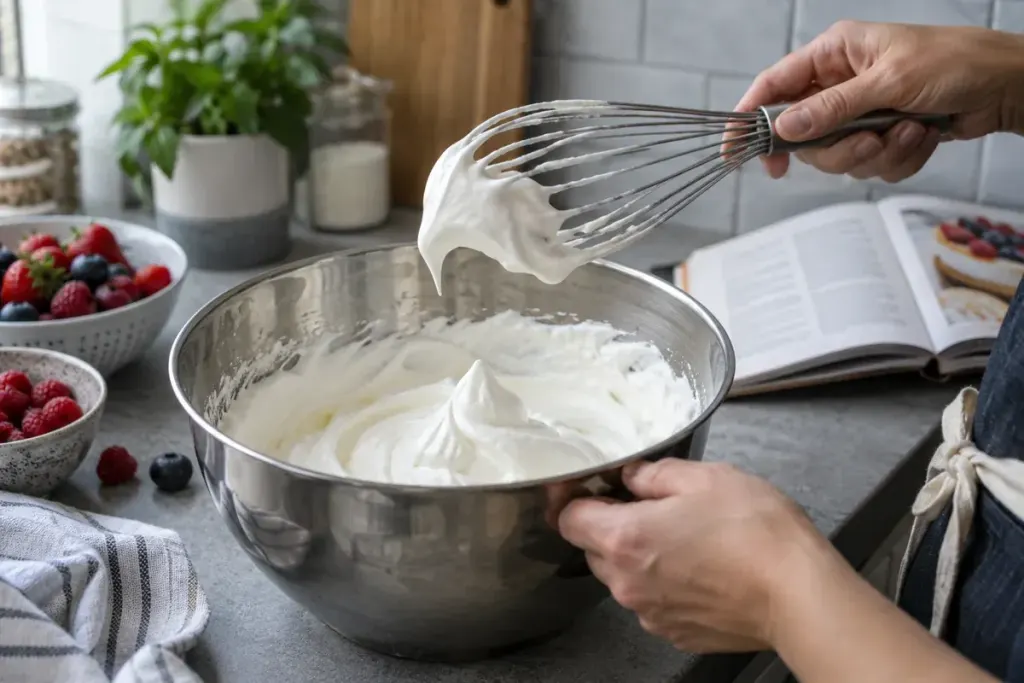
The difference between cream that drapes over a brownie and cream that holds a piped shape is visible at the whisk. Watching that change is more reliable than copying a mixing time from someone else’s kitchen.
Use cream suitable for whipping and begin with it cold. The bowl size, amount of cream and mixer speed all influence how quickly the texture develops. A recipe’s timing is a guide, not a command to keep the motor running after the cream is ready.
Lift the whisk and look
At a soft peak, the cream holds a shape briefly but the tip bends over. This texture suits spooning over desserts or folding where the recipe calls for softness. As whipping continues, the cream becomes more structured and the peak stands more firmly.
King Arthur Baking’s guide to whipping cream illustrates the progression. Check the texture frequently as it thickens, and slow down or finish by hand when you are close. A short pause is easier to recover from than a few seconds too much at high speed.
Match the peak to the job
For a casual spoonful beside a dense chocolate square, soft cream can provide a pleasant contrast. For a piped decoration, a firmer texture may be necessary. Follow the dessert recipe where the cream is being folded into another mixture, because its structure affects how the finished preparation behaves.
Add sugar or flavouring according to the recipe and taste thoughtfully. A very sweet brownie may need less sweetness in its topping. Avoid adding a large amount of liquid flavouring without considering how it changes the mixture.
If the cream begins to look rough or grainy, stop immediately. King Arthur also explains a limited rescue for slightly overwhipped cream. Once it has separated substantially, continuing to whisk will not return it to a smooth topping. Do not present a rescue method as a guarantee for every stage of separation.
Keep whipped cream refrigerated and follow appropriate food-safety guidance for storage and serving. Make only the amount the dessert needs, and keep the topping cool until it is time to use it. The most helpful skill is recognising the texture in front of you: pause, lift the whisk and let the peak tell you when to stop.