
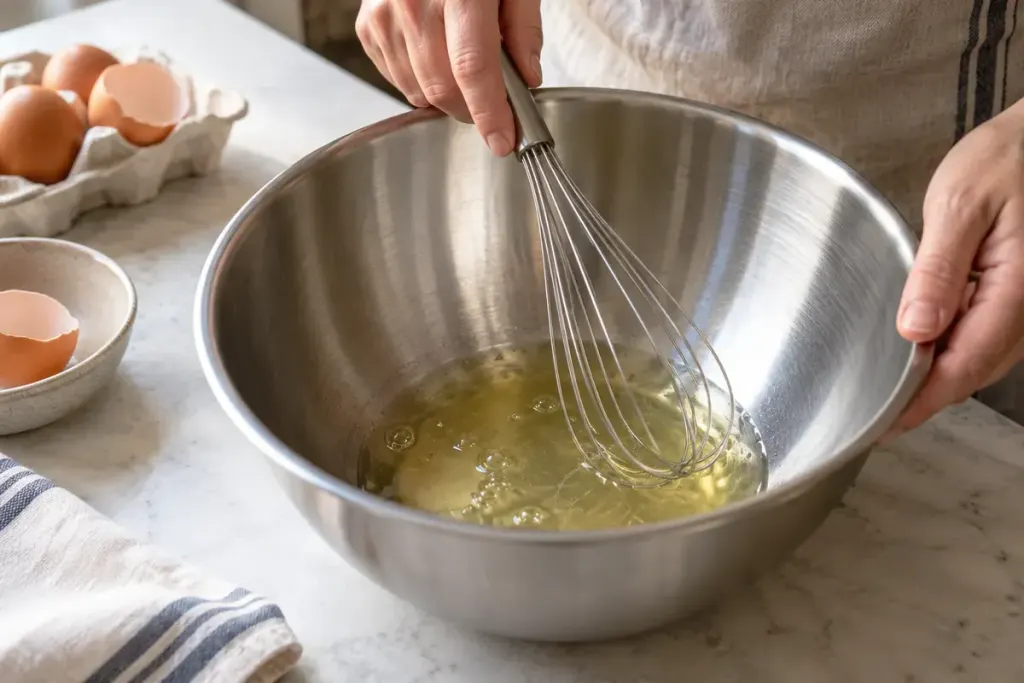
The mixer is running, but the egg whites remain disappointing. Before blaming the machine or adding another ingredient, look at the preparation. Meringue begins with a bowl, whisk and whites that are ready for the method you are using.
Inspect the tools before separating eggs
Use a clean, suitable bowl and whisk, free from greasy residue. A bowl that has just held buttercream deserves a proper wash, not a quick wipe. Check the joints and wires of the whisk as well as the obvious surface of the bowl.
Separate each egg into a small intermediate container before adding the white to the main bowl. That way, a broken yolk does not immediately affect every white already collected. Keep food-safety handling in mind, and use the ingredients and cooking method specified by a reliable recipe.
Do not combine different meringue methods
French, Swiss and Italian meringues involve different handling of whites, sugar and heat. Follow one tested method from start to finish. A sugar addition or temperature instruction taken from another style is not automatically a useful improvement.
King Arthur Baking’s meringue discussion examines common preparation rules and ingredient behaviour. Use such guidance to understand the process, while keeping your chosen recipe’s intended texture and final use in view.
Watch the foam as it changes rather than relying on an exact minute count. The amount of mixture, equipment and recipe affect timing. Stop at the stage the recipe asks for; continuing indefinitely is not a dependable cure for a mixture that is behaving incorrectly.
If a batch fails, write down the method, equipment and where the result first differed from the instructions. Make one controlled change on the next attempt. A clean preparation routine is valuable because it removes an avoidable uncertainty before you begin testing the more subtle parts of the recipe.