
A cake tastes less lemony than you hoped, so the next attempt gets another generous splash of juice. The flavour changes, but so does the batter. Lemon juice is not simply liquid zest: it adds moisture and acidity as well as flavour.
When reading a recipe, keep zest and juice as separate ingredients. The yellow outer peel and the squeezed liquid perform different jobs, and replacing one with the other can change more than the intensity of the lemon.
Take the zest before squeezing
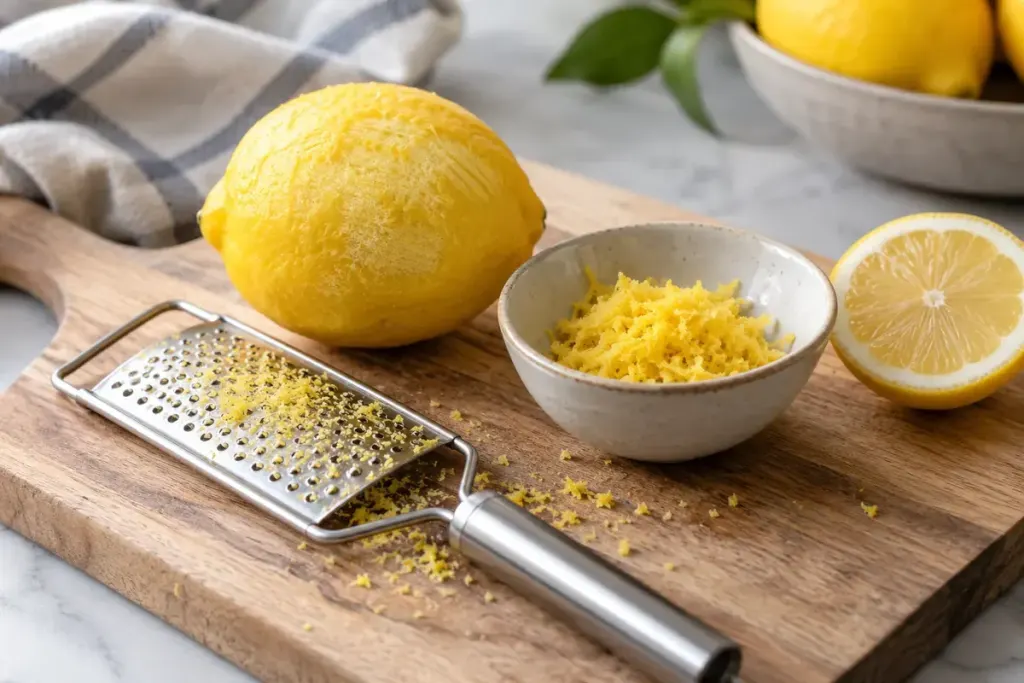
Wash the fruit appropriately, dry it and remove the coloured outer layer with the tool specified or a suitable fine grater. Work carefully and stop before your fingers approach the sharp surface. Avoid repeatedly grating the same spot into the white pith beneath.
Zest the whole fruit before cutting it for juice; it is generally easier to hold a firm lemon than a squeezed half. Measure the zest and juice separately. Lemons vary in size and yield, so “one lemon” may be less repeatable than a recipe that provides a measured quantity.
Change the flavour without guessing at the formula
If the recipe offers a zest variation, use that as the starting point. Do not pour in extra juice without considering its liquid and acid contribution. This is particularly important in preparations whose setting, texture or leavening depends on the stated proportions.
For a simple tasting comparison outside the main bake, try small amounts of zest and juice in separate spoonfuls of a suitable plain icing or topping. Notice aroma, sharpness and consistency. This exercise helps you describe what you want; it does not establish a universal substitution ratio for cakes, curds or custards.
Keep the successful version
Write the actual amount used and where it entered the recipe. Zest mixed into a batter and juice added to a finishing glaze can produce a different experience from putting both into the batter.
Store any prepared ingredients and finished dessert according to the recipe’s food-safety guidance. When you taste the result, ask whether it needed more aroma, more tartness or a different topping. A specific answer is easier to act on than simply deciding it needed “more lemon”.