
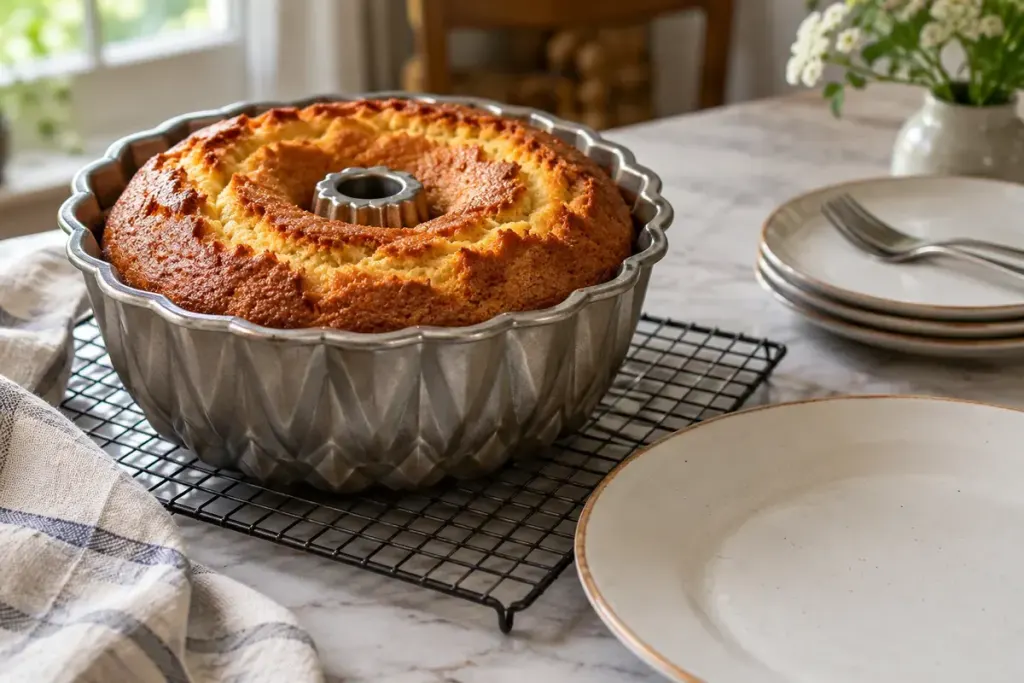
The cake has baked through and smells wonderful. Turning it out immediately can still damage its shape, while leaving it indefinitely in the pan may create a different release problem. The useful timing is the one specified for the recipe and pan you used.
Read the cooling and unmoulding instructions before the cake goes into the oven. That gives you time to prepare a heatproof surface, a suitable rack and oven gloves instead of improvising while holding a hot pan.
Follow the sequence as well as the minutes
King Arthur Baking’s classic vanilla Bundt recipe provides its own sequence for inverting and lifting off the pan. Other recipes may specify a different rest. Do not take a timing from one cake and assume it is universal for every batter, filling or pan design.
Check doneness using the recipe’s cues before beginning the cooling period. An underbaked centre cannot be fixed by choosing a better moment to turn the cake out. Likewise, pan preparation needs to happen before filling, with attention to the central tube and decorative grooves.
When the instructed time arrives, work on a stable surface. Position the rack or plate as directed and use a controlled movement. Avoid shaking violently or inserting a sharp knife into delicate pan surfaces.
- Keep a note of the pan material and capacity.
- Record the preparation product and method.
- Start the cooling timer at the stated stage.
- Photograph any sticking pattern for the next attempt.
If one area repeatedly sticks, inspect that part of the pan and the way it was prepared. A damaged coating, an ungreased groove or a filling near the surface may deserve separate attention.
A broken piece does not make the whole bake worthless. Let it cool safely and consider a sliced or layered dessert presentation. For the next cake, change one likely cause at a time so the improvement is something you can repeat.