
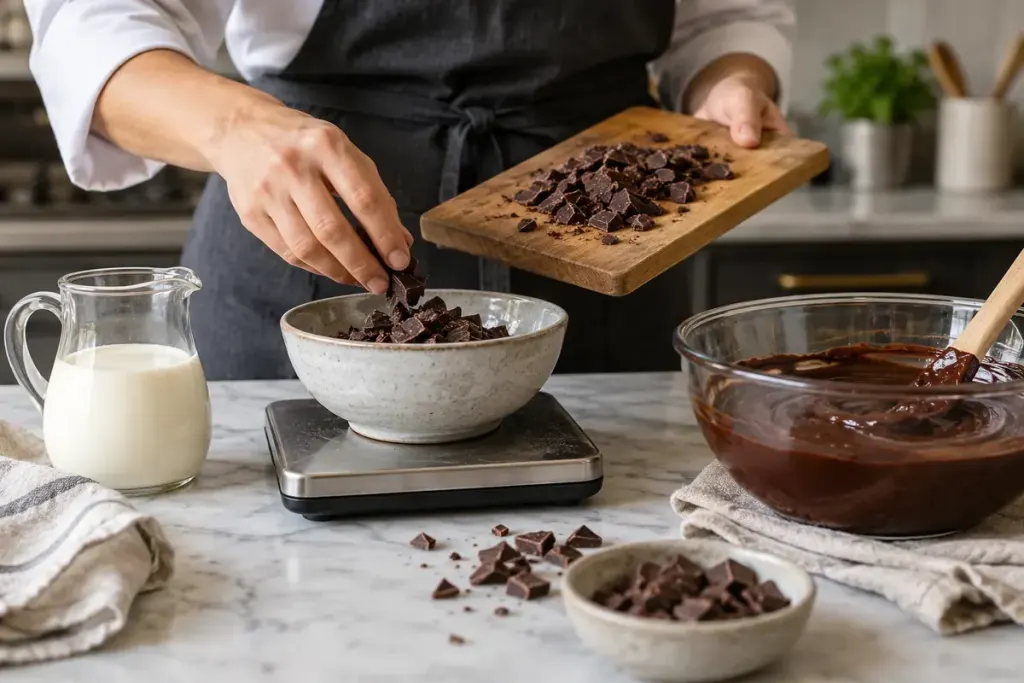
A ganache that pours beautifully over a cake may be too soft to hold a piped shape. Before changing the cream, decide what the mixture needs to do and which chocolate the recipe expects.
Read the ratio in the right order
A ratio is incomplete unless it names both ingredients and the measuring basis. “Two to one” can mean different things when one writer lists chocolate first and another lists cream first. Write the quantities in grams beside the formula before scaling it.
King Arthur Baking’s ganache guide explains weight-based ratios and how the chocolate type affects the formula. Use a tested recipe for the intended application rather than transferring a dark-chocolate ratio unchanged to milk or white chocolate.
Compare at the temperature you will use
Freshly mixed warm ganache behaves differently from the same mixture after cooling. Follow the recipe’s resting instructions before deciding that it needs more chocolate or cream. A mixture intended for pouring is assessed at a different working condition from one intended as a firm filling.
For a small trial, record the chocolate product, cream quantity, mixing method and time allowed to cool. Keep the recipe’s handling and storage instructions with the notes. Do not leave a cream-based mixture out indefinitely while waiting for a preferred texture.
Scale the formula, then test the result
If a recipe uses 200 grams of chocolate and 100 grams of cream, half the batch uses 100 and 50 grams. That arithmetic example demonstrates scaling, not a universal ganache recipe. The correct formula still depends on the chosen ingredients and use.
Make a modest trial before preparing a large celebration cake. Test the intended finish on a suitable sample and observe it under the expected serving conditions. A clear record of ingredients and temperature is more useful than a note saying only that the ganache was too runny.