
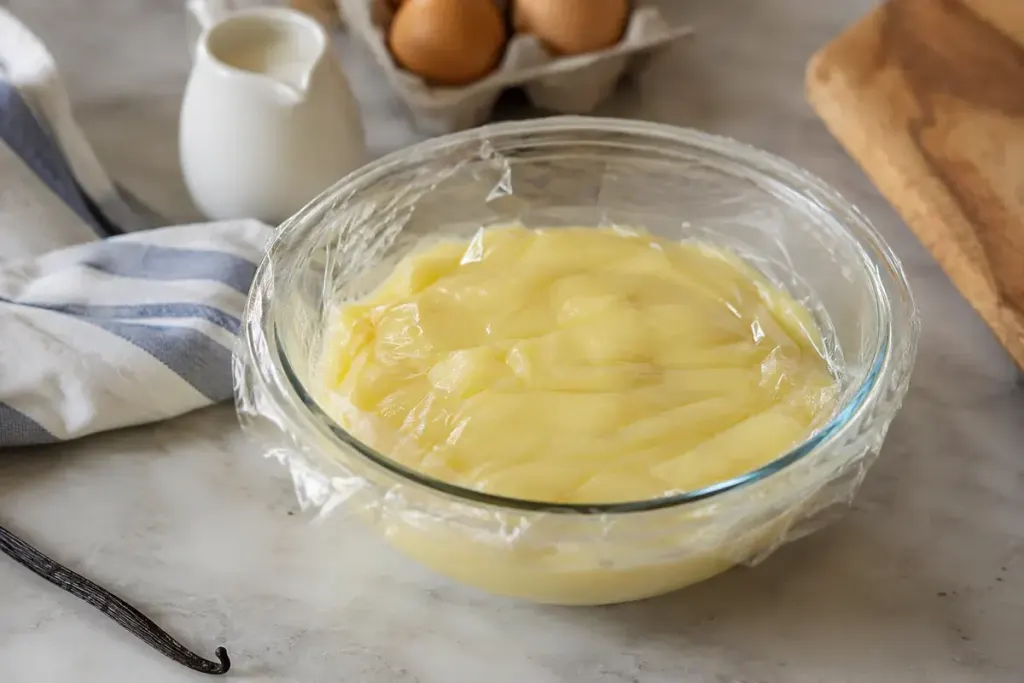
Pastry cream can leave the pan glossy and develop a tougher layer while it cools. That skin is easy to stir back into the bowl, but the result may not be the smooth filling you wanted. Think about cooling before the custard is finished, so the next container and covering are ready.
A surface covering is different from a lid stretched across the top of a bowl. The idea is to limit exposure at the cream’s surface. Use food-safe material suitable for the temperature and follow the recipe’s method rather than assuming every household film is appropriate for hot food.
Prepare the cooling stage first
King Arthur Baking’s pastry cream recipe uses plastic wrap or parchment directly against the surface and refrigerates the cream before beating it smooth for use. Its instructions apply to that recipe; a different formula may specify another cooling or finishing process.
Choose a clean container that allows the cream to cool efficiently. For a larger quantity, follow a reliable food-safety cooling method rather than leaving a deep pot on the counter for hours. Refrigeration is part of handling this perishable filling, not merely a way to make it thicker.
Distinguish a skin from the set underneath
Cold pastry cream is normally firmer than it was in the pan. A recipe may instruct you to stir or beat it before filling pastries. That is different from trying to rescue a cooked or dried surface layer by forcefully mixing everything together.
When uncovering, keep the covering’s outside away from the food. Use clean utensils and return unused cream to appropriate refrigeration promptly. Write the preparation date on the container and follow the storage guidance for the recipe you actually made.
For the next batch, note the container, covering, and cooling method alongside the ingredients. Texture problems often arise between the stove and the piping bag, so a useful baking note records that part of the process too.