
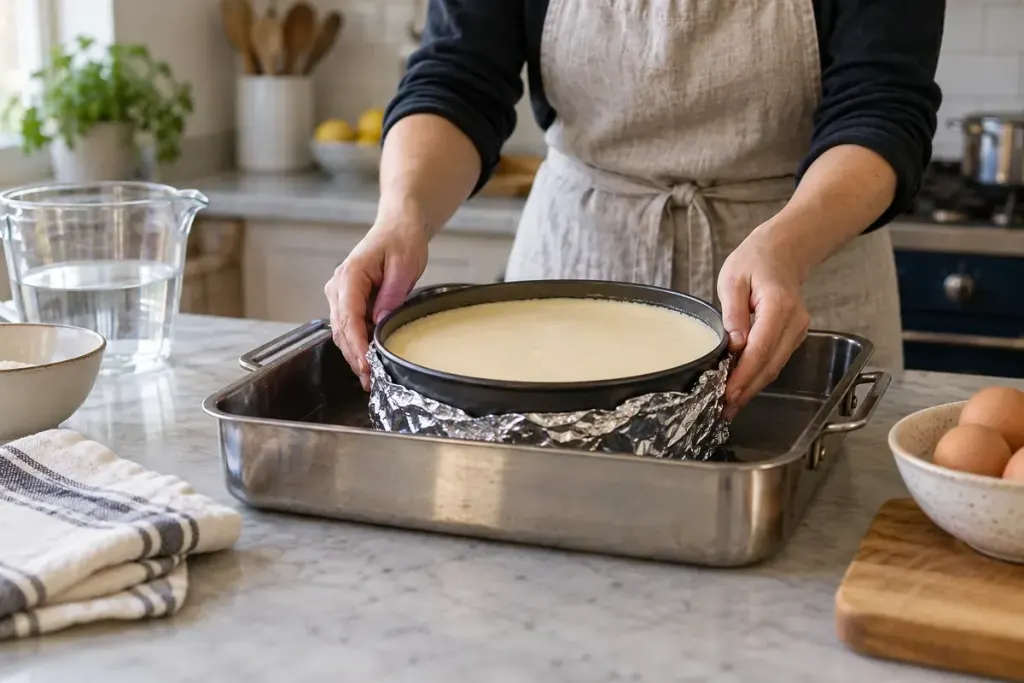
A smooth cheesecake is less satisfying when the crust underneath has absorbed bath water. Before mixing the filling, assemble the pans and work out how the water will stay outside the cake tin.
King Arthur Baking’s cheesecake baking trials discuss water baths and the practical difficulty of wrapping a pan, finding enough clearance and moving a heavy tray. Those details deserve attention before the oven is hot.
Do a dry assembly
Place the empty cake tin inside the intended outer pan. Check that it sits level, that there is room around it and that the complete arrangement fits the oven rack. Decide where the hot assembly can safely rest afterwards. Clear that landing space now.
If the recipe specifies wrapping a springform tin, use the method it describes and inspect the barrier for tears or low seams. A springform mechanism is not proof of waterproofing. Do not assume that extra layers will compensate for a damaged tin or an unsuitable setup.
Follow one tested method
Use a recipe written for the pan size and water-bath arrangement you have. Adding a separate pan of water elsewhere in the oven is a different setup from placing the cake tin in a bath; do not quietly substitute one and expect identical timing.
When filling and moving the bath, follow the recipe’s handling instructions, use suitable oven protection and avoid overfilling. Keep children and pets away from the work area. If the arrangement feels unstable during the empty trial, change it before introducing hot water.
After baking, follow the specified cooling and refrigeration steps. If the base is unexpectedly wet, record where the water level reached and how the pan was protected. That note can help distinguish leakage from another texture problem on the next attempt.
The best preparation is deliberately unglamorous: a sound tin, compatible pans and a safe route into and out of the oven. It gives the recipe a fair chance to produce the texture you wanted.