
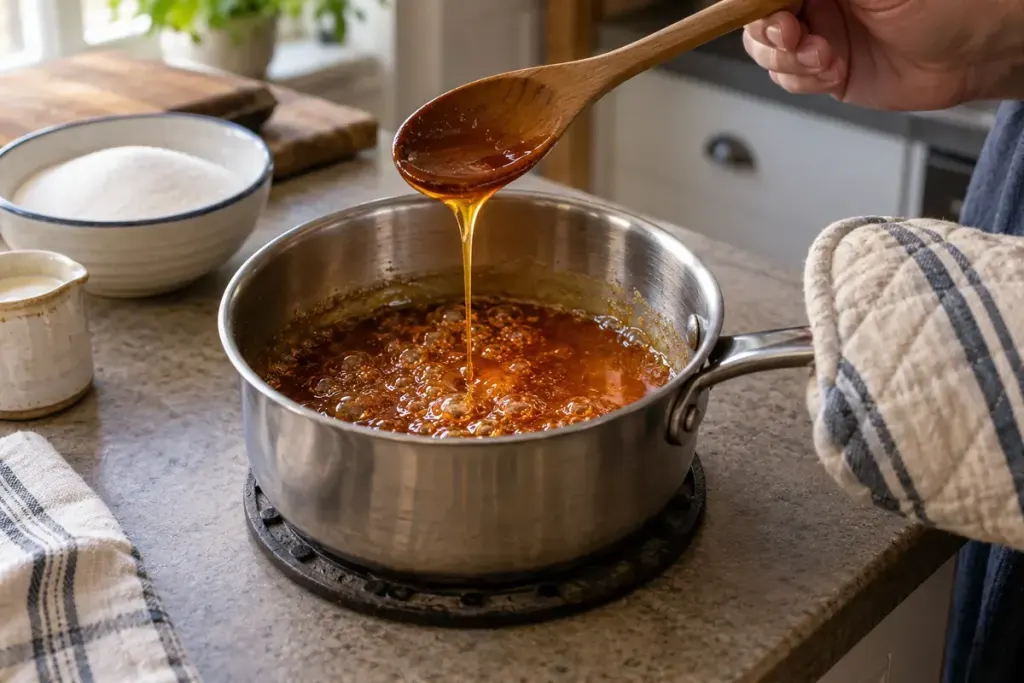
Caramel reaches a colour you like, you lift the pan from the hob, and it continues to darken. Removing the heat source does not instantly cool the sugar or the pan. The finishing step needs to be ready before that brief decision point arrives.
Choose a reliable recipe and read it through first. Dry caramel, wet caramel and a caramel sauce can require different handling. Do not combine instructions from several methods halfway through a hot pan of sugar.
King Arthur Baking explains how caramel continues cooking from residual heat. Use the stopping method in the recipe you are following rather than assuming that lifting the pan is the whole finishing step.
Set up the landing place
Have the specified ingredients measured, suitable tools ready and a stable heatproof surface available. Keep children and pets away from the cooking area. Hot sugar can cause serious burns, and this is not a stage at which to taste from a spoon or touch a drip.
Use a pan appropriate to the recipe and watch the colour in good light. A dark interior can make that judgement harder. Stay with the pan as the colour develops rather than relying on a timer while you do another task.
Follow the recipe’s stopping method
Some recipes direct you to add another ingredient at a particular point; others use the caramel immediately. Follow that method carefully. Adding liquid can create vigorous bubbling and steam, so do not improvise a splash of water to rescue an uncertain result.
If the caramel has burnt, continuing to add ingredients may only spread the bitter flavour through the dessert. Let the pan cool safely and reassess rather than rushing into another hazardous correction.
For the next attempt, note the pan, heat setting and colour at the moment you moved to the following step. These observations help you learn how your equipment behaves. The aim is not to chase a universal number of seconds, but to arrive at the finish with the recipe, tools and safe working space already prepared.