
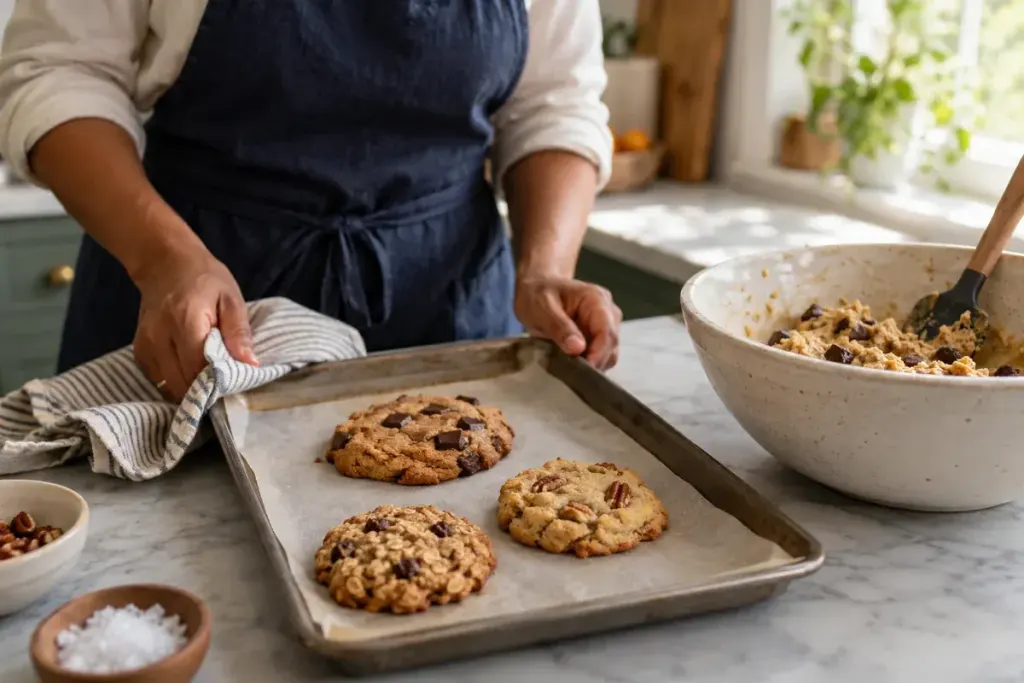
One tray of cookies spreads into a single sheet, and the rest of the dough is still waiting in the bowl. A small test bake can reveal that problem before every portion goes into the oven.
Make the sample representative
Keep tasting for the baked result. The FDA explains why raw flour and unbaked dough need careful handling; a test bake should not become a raw-dough tasting session.
Use the intended portion size, tray, lining and oven setting. Follow the recipe’s chilling instructions before testing. A tiny scrap of dough on a different pan will not tell you much about the full-sized cookies you actually plan to serve.
Space a few portions normally and note their starting condition. Bake according to the recipe, watching the relevant visual cues. Let them cool as directed before judging texture; a warm cookie and a cooled one can feel very different.
Record what you see rather than immediately naming a cause: excessive spread, dark edges with a pale centre, or a thick centre that remains underdone. The observation narrows the question. It does not automatically prove that the flour, oven or recipe is wrong.
Choose one change
If the dough warmed during handling and the recipe calls for chilled portions, restore that condition before the next sample. If portion sizes vary, make them consistent. Avoid adding flour, lowering the temperature and changing the tray all at once; even a better result will leave you unsure what helped.
Keep raw dough containing ordinary flour or raw egg out of tasting experiments. Judge the cooked sample, and follow food-safety guidance for handling and storage. Do not leave the remaining dough in unsuitable conditions while testing repeatedly.
Once you have a satisfactory sample, keep the process consistent for the main batch, including cooling hot trays between rounds where the recipe requires it. The test is valuable because it makes the next batch more predictable, not because it guarantees every recipe can be repaired by improvisation.