
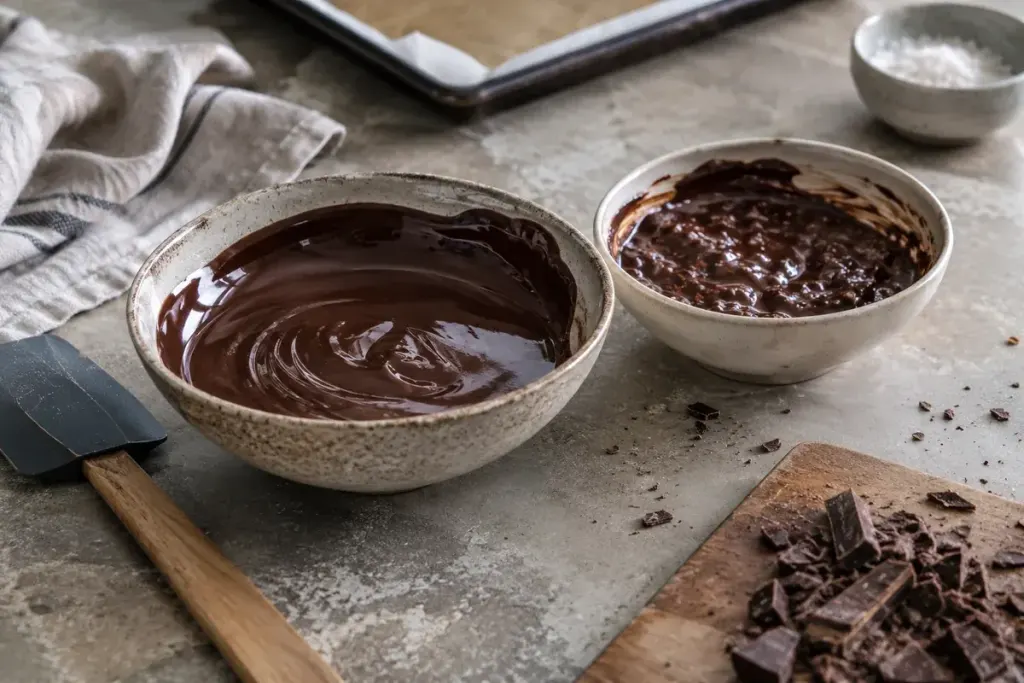
The chocolate was glossy a moment ago. After a stray splash, it becomes thick and grainy. Adding more heat feels like the obvious rescue, but heat alone may not address what changed.
Chocolate that is intended to stay mostly chocolate behaves differently from a sauce deliberately made with enough liquid. Before trying to save the bowl, decide what you need it to become.
Separate the accident from the recipe
King Arthur Baking’s explanation of chocolate and water describes why a small amount of water can cause seizing, while sufficient liquid can be part of a smooth chocolate preparation. The quantity and intended result matter.
A bowl meant for coating strawberries or making a crisp shell is not interchangeable with a chocolate sauce. Even if a grainy mixture can be smoothed for another purpose, it may no longer provide the texture the original recipe requires.
Pause before adding ingredients
Take the bowl away from the heat safely and review what happened. Was there water from a utensil, steam from the pan or an ingredient added out of sequence? Scorching is a different problem from seizing, and a burnt flavour is not repaired by making the texture smoother.
Do not add random amounts of oil, butter and liquid in succession. Each changes the composition and can make the mixture harder to use predictably. Find a tested recipe for the new purpose if you choose to repurpose it.
Choose a realistic second use
For an illustrative decision, chocolate originally intended for a firm decorative coating might instead become part of a sauce recipe with an appropriate liquid ratio. That is a change of plan, not proof that the original coating has been restored.
Record what you added and label any stored mixture with its ingredients and date. Follow safe storage guidance for the ingredients involved, especially when dairy or other perishable additions enter the bowl.
Make the next melt easier
Use clean, dry equipment and the controlled heating method recommended by your recipe. If using a water bath, prevent water and condensation reaching the chocolate. If using a microwave, follow a suitable short-interval method and stir rather than relying on appearance alone.
The useful lesson is not that chocolate and water must never meet. It is that an accidental splash and a deliberately balanced liquid recipe are different situations. Knowing the intended finish helps you decide whether to rescue, repurpose or begin again.