
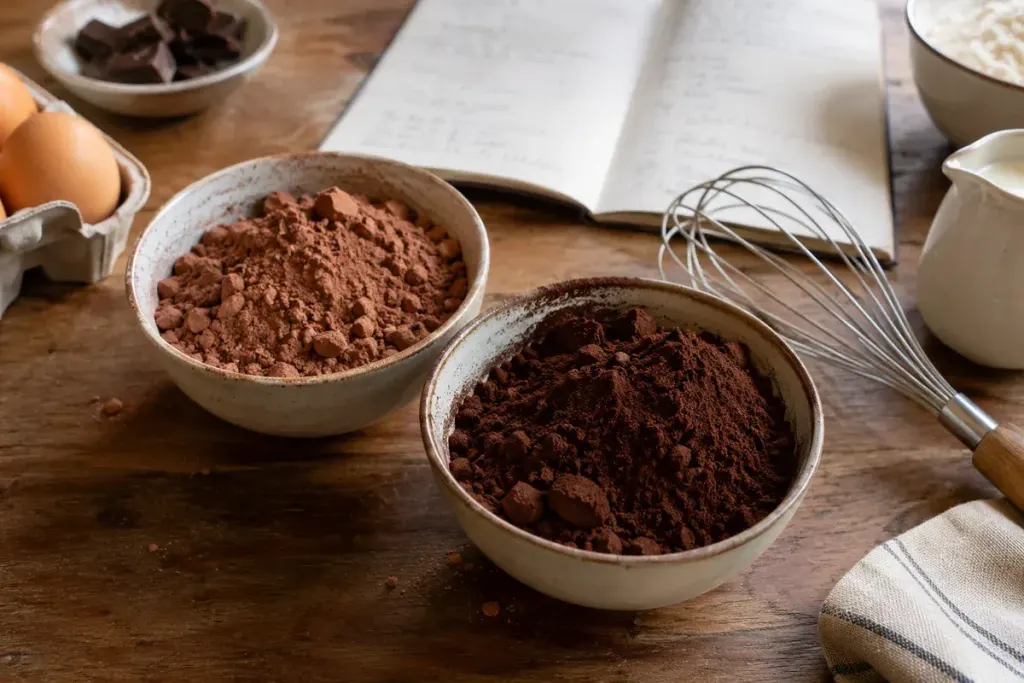
The brownie batter looks darker than usual, even though you weighed the same amount of cocoa. A different cocoa powder can change more than colour, and the ingredient list is a better guide than the shade of the tin.
Before trying to correct a disappointing bake, identify which cocoa the recipe specifies and which one you actually used.
Read the processing description
Natural cocoa is acidic; Dutch-process cocoa has been treated to reduce acidity. This distinction can affect how it works with a recipe’s leavening. King Arthur Baking’s comparison explains the relationship and the limits of simple substitutions.
Follow the type named in a tested recipe, especially when you are baking it for the first time. “Unsweetened” tells you something different from “Dutch-process.” A drink mix containing sugar or milk ingredients is not the same ingredient as unsweetened cocoa powder.
Do not repair three variables at once
If a bake disappoints, record the cocoa, raising agents, pan and baking conditions before making changes. Switching cocoa, increasing flour and changing the oven temperature in the next batch may produce something better, but it will not tell you why.
For a useful home comparison, choose a recipe whose author explicitly permits both cocoa types. Make separate, carefully weighed batches on different occasions or under comparable conditions. Keep the method and pan consistent. Do not improvise chemical-leavener ratios from a general rule when the recipe contains other acidic ingredients.
Compare more than darkness
Once the bake has cooled as directed, note aroma, flavour, texture and how cleanly it cuts. Use plain descriptions such as “more bitter at the finish” or “softer centre” rather than deciding that darker automatically means better.
A small tasting sheet can record the cocoa brand and type, recipe version, baking time and observations the next day. Label the samples before serving them; memory is a poor substitute for a clear record after two similar batches.
Choose for the recipe you enjoy
There is no need to turn the pantry into a cocoa collection. One powder that suits your favourite tested recipes may be enough. Store it according to its packaging, keep the label available and note substitutions when you make them.
The useful discovery is not that one cocoa wins every time. It is that cocoa is an ingredient with a role in a specific formula. Understanding that role makes your next brownie experiment more deliberate—and much easier to repeat.